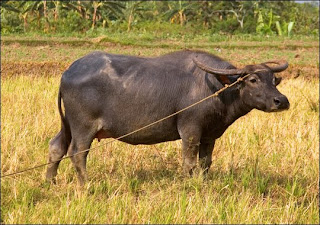
The Asian buffalo is a cattle species that occurs in India, Nepal, Bhutan and Thailand, but its range was once much larger. It is a massive animal with heavy, flattened horns that are used to shovel and fling mud onto its back. Its preferred habitat is grasslands with abundant plant life and nearby watering pools for wallowing. The Asian buffalo is threatened by hunting, interbreeding with domestic stocks and loss of habitat, and there may be only a few thousand individuals left in the wild.
IUCN Status: Endangered
Major Threats: Hunting, interbreeding with domestic stocks and habitat loss
Habitat: Abundant grasslands near watering pools
Location: India, Nepal, Bhutan and Thailand
Diet: Grasses and other vegetation
ASIAN ELEPHANT (Elephas maximus)
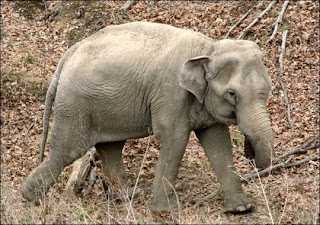
Asian elephants are somewhat smaller than African elephants, their close relatives. Like all elephants, they live in small family groups and young calves are raised by their mothers as well as other members of the herd. Individuals communicate by vocalizations, foot stomping and postures, in order to stick together and to warn each other of approaching predators. The Asian elephant is rapidly declining due to loss of suitable habitat throughout its range.
IUCN Status: Endangered
Major Threats:Loss of suitable habitat
Habitat: Mainly scrub forest
Location: Parts of India and Southeast Asia
Diet: Grasses, bark, roots, leaves and other vegetation
BAIRD'S TAPIR (Tapirus bairdii)
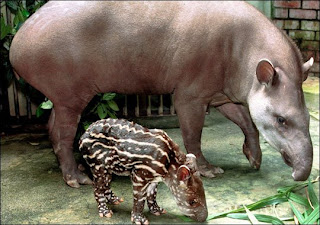
Tapirs are pig like animals with long legs, an extended trunk and relatively streamlined bodies. Baird's tapir — the largest of the tapirs — has short, dark bristly hair with a light-colored chin and throat. It can be found in the forests of Central and South America, feeding on plant parts near freshwater sources. Baird's tapir are endangered throughout their range due to hunting and habitat destruction.
Endangered
Major Threats:Hunting and habitat destruction
Habitat: Dense tropical rain forest
Location: Central and South America
Diet: Leaves and fallen fruit
BLUE WHALE (Balaenoptera musculus)

The largest animal on the planet, the blue whale can reach a length of more than 100 feet. Despite their size, they are remarkably skilled divers, rapidly plunging several hundred feet below the surface using their back muscles to propel them. When they emerge from the dive, they let out a torrent of water, air and mucus from their blowhole. They are found in most of the world's oceans, and are threatened by noise and other environmental pollution throughout much of their range.
IUCN Status: Endangered
Major Threats: Noise and other environmental pollution
Habitat: Open ocean
Location: World's oceans
Diet: Mainly krill
CHEETAH (Acinonyx jubatus)
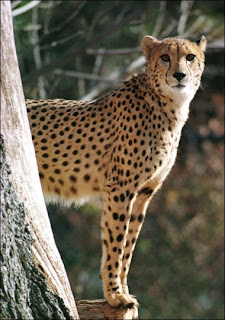
The cheetah is a golden-yellow cat with black spots and a ringed tail. The world's fastest land animal, the cheetah can reach speeds of more than 60 miles per hour. It cannot, however, maintain that speed for more than a few seconds. If prey can last longer than 10-20 seconds, it usually escapes. Cheetahs are among the world's most loved animals. There are major international efforts to save them from extinction. It is endangered due to habitat loss, reduction of prey species, inbreeding and high infant mortality.
IUCN Status: Vulnerable
Major Threats: Habitat loss, loss of prey species, inbreeding and infant mortality
Habitat:Areas with tall grass and shrubs
Location: Sub-Saharan African and Northern Iran
Diet: Mainly gazelles; also impalas, antelope young and small mammals .
CHIMPANZEE (Pan troglodytes)
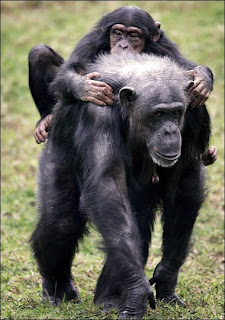
The chimpanzee has a bare face, longer arms than legs and dark hair thinly covering its body. It is one of the few primate species capable of walking upright. They live in large social groups in which the young are cared for by their mothers for about three years. During that time, young chimpanzees learn feeding techniques, including the use of tools. Chimpanzees are threatened by hunting and loss of habitat.
IUCN Status: Endangered
Major Threats: Hunting and habitat loss
Habitat:Tropical rain forest, montain forest,and forest-savanna environments
Location: Central Africa
Diet: Mainly fruits and young leaves; also other plant parts, insects, small vertebrates, eggs, etc.
GIANT PANDA (Ailuropoda melanoleuca)

The giant panda has a distinctive white head with black eye patches, ears and shoulders. Unlike other bear species, giant pandas are entirely herbivorous, spending up to 12 hours a day chewing bamboo shoots and roots. Because of poaching and habitat loss, they are extremely rare, occurring in small populations in the bamboo forests of China. Despite being the subject of major international conservation efforts, wild populations of giant pandas may not be enough to save this species.
IUCN Status: Endangered
Major Threats:Habitat loss, poaching and human encroachment
Habitat:Mountainous regions where bamboo is present
Location:Central China
Diet: Bamboo shoots and roots .
GORILLA (Gorilla gorilla)
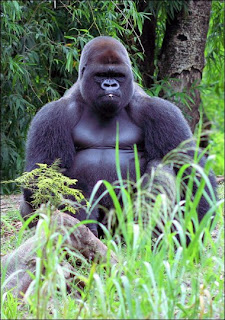
The gorilla is the largest of the primates. Adult males are often twice the size of females and have a silvery back when fully mature. They live in highly complex social groups led by a dominant male in the lowland and swamp forests of Central and Equatorial Africa. The gorilla faces many threats in the wild, including slash-and-burn forest clearing, illegal hunting for the bushmeat trade and trophy poaching.
IUCN Status: Endangered
Major Threats:Habitat loss and hunting
Habitat:Tropical secondary and montane forests
Location:Central and Equatorial Africa
Diet: Fruits, leaves shoots and some insects.
ORANGUTAN (Pongo pygmaeus)
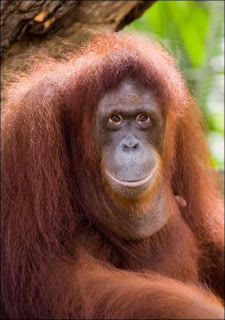
The orangutan is a tree-dwelling primate that rarely ventures down to the ground. It has orange-red fur, long arms and handlike feet. Young orangutans cling to their mother as she navigates the forest canopy, feeding on fruit and other plant parts as well as honey, lizards, birds and eggs. Threats to the orangutan include hunting, loss of habitat and being captured for the illegal pet trade.
IUCN Status: Endangered
Major Threats:Hunting, habitat loss and the illegal pet trade
Habitat:Various tropical forest habitats
Location: Island of Borneo
Diet: Fruits and other plant parts; also honey, lizards, birds and eggs
TIGER (Panthera tigris)
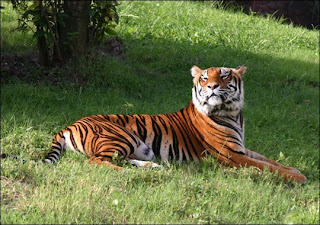
The tiger is the largest member of the cat family. A symbol of wildlife conservation, it is a majestic animal with an orange coat, black stripes and white markings. It lives in tropical forests, where it is usually solitary and nocturnal. Its range once extended to Eastern Europe, but it now lives in scattered populations in southern and eastern Asia. It is threatened by poaching, habitat loss and loss of prey species.
IUCN Status: Endangered
Major Threats:Poaching, habitat loss and loss of prey species
Habitat: Various habitats including rain forest, deciduous forest and coniferous forest
Location: Southern and eastern Asia
Diet: Mainly large, hooved animals.
SUMATRAN RHINOCEROS (Dicerorhinus sumatrensis)
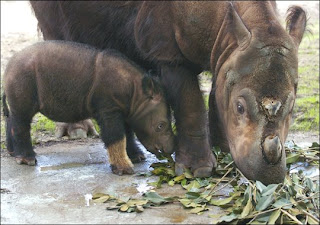
The Sumatran rhinoceros is the smallest and hairiest of the world's living rhinoceroses. It is also one of the most critically endangered. As the name suggests, these animals occur in Sumatra and also Borneo, although they once roamed throughout Southeast Asia. Because of poaching and destruction of its rainforest habitat, Sumatran rhinoceros numbers have been in steady decline in recent decades and there may be fewer than 300 hundred individuals left in the wild.
IUCN Status: Critically Endangered
Major Threats:Poaching and habitat destruction
Habitat: Lowland secondary rainforest, swamps and moss forests
Location: Sumatra and Borneo
Diet: Young saplings, leaves and other vegetation.


 Classified as a terrestrial planet, it is sometimes called Earth's "sister planet," because they are similar in size, gravity, and bulk composition. Venus is covered with an opaque layer of highly reflective clouds of sulfuric acid, preventing its surface from being seen from space in visible light.
 Venus is always brighter than the brightest stars
Venus has the densest atmosphere of all the terrestrial planets, consisting mostly of carbon dioxide, as it has no carbon cycle to lock carbon back into rocks and surface features, nor organic life to absorb it in biomass.
Venus is always brighter than the brightest stars
Venus has the densest atmosphere of all the terrestrial planets, consisting mostly of carbon dioxide, as it has no carbon cycle to lock carbon back into rocks and surface features, nor organic life to absorb it in biomass.
 Impact craters on the surface of Venus
A younger Venus is believed to have possessed Earth-like oceans, but these totally evaporated as the temperature rose, leaving a dusty dry deserts cape with many slab-like rocks. The water has most likely dissociated, and, because of the lack of a planetary magnetic field, the hydrogen has been swept into interplanetary space by the solar wind. The atmospheric pressure at the planet's surface is 92 times that of the Earth.
Impact craters on the surface of Venus
A younger Venus is believed to have possessed Earth-like oceans, but these totally evaporated as the temperature rose, leaving a dusty dry deserts cape with many slab-like rocks. The water has most likely dissociated, and, because of the lack of a planetary magnetic field, the hydrogen has been swept into interplanetary space by the solar wind. The atmospheric pressure at the planet's surface is 92 times that of the Earth.
 Classified as a terrestrial planet, it is sometimes called Earth's "sister planet," because they are similar in size, gravity, and bulk composition. Venus is covered with an opaque layer of highly reflective clouds of sulfuric acid, preventing its surface from being seen from space in visible light.
 Venus is always brighter than the brightest stars
 Impact craters on the surface of Venus


 The Lost River sucker is a large fish found in the freshwater ecosystems of California and Oregon. It is a long-lived fish, sometimes reaching an age of 40 years or more. Its primary home is in lakes, but it migrates to rivers and streams to breed. The Lost River sucker is threatened by overfishing and by the damming of rivers and the draining of wetlands.
  The Mekong giant catfish is a freshwater fish that grows to be very large — about as large as a grizzly bear in some cases. This enormous fish was historically found throughout the Mekong River, which is the 12th longest river in the world. The waterway spans about 2,983 miles (4,800 kilometers) from its headwaters in the Tibetan Plateau throughout much of Southeast Asia. Currently, Mekong giant catfish populations are in rapid decline, primarily due to dams, overfishing and pollution.

 The Russian sturgeon is a large, bony fish that can reach a length of more than 6 feet. It lives in salt water and travels upriver to spawn, which makes it vulnerable to habitat loss on multiple fronts, including hydroelectric dams that create barriers to spawning grounds, pollution in both its freshwater and saltwater homes, and being heavily fished for its meat and eggs, which are used to make caviar.
  Like sharks, skates and rays, sawfish have skeletons made of cartilage rather than bone. The smalltooth sawfish is a long, sleek fish that occurs in shallow coastal and estuarine waters in the Atlantic and Pacific oceans as well as the Gulf of Mexico. It also has a long, flattened snout lined with rows of teeth that it uses to locate and subdue prey. In addition to facing the threat of hunting, pollution and habitat loss, it is extremely vulnerable to being caught in fishing lines.
IUCN Status: Critically Endangered
Like sharks, skates and rays, sawfish have skeletons made of cartilage rather than bone. The smalltooth sawfish is a long, sleek fish that occurs in shallow coastal and estuarine waters in the Atlantic and Pacific oceans as well as the Gulf of Mexico. It also has a long, flattened snout lined with rows of teeth that it uses to locate and subdue prey. In addition to facing the threat of hunting, pollution and habitat loss, it is extremely vulnerable to being caught in fishing lines.
IUCN Status: Critically Endangered

 The brown kiwi is a stocky nocturnal bird that is native to New Zealand. A flightless bird, the brown kiwi feeds by walking slowly through the forest poking its long, slender bill — which is highly sensitive to touch — into the ground in search of worms, insects and larvae. It was once found throughout New Zealand, but is now restricted to fragmented forests and seriously threatened by non-native predators such as pigs, cats and dogs.
IUCN Status: Endangered
The brown kiwi is a stocky nocturnal bird that is native to New Zealand. A flightless bird, the brown kiwi feeds by walking slowly through the forest poking its long, slender bill — which is highly sensitive to touch — into the ground in search of worms, insects and larvae. It was once found throughout New Zealand, but is now restricted to fragmented forests and seriously threatened by non-native predators such as pigs, cats and dogs.
IUCN Status: Endangered
 The crowned eagle is a mighty bird of prey with broad wings, pale gray plumage and a distinct crest on its head. It occurs throughout central South America in both forest and semi-open areas. Like many birds of prey, the crowned eagle is endangered because of habitat loss. As top predators, they are also vulnerable to toxins present in their prey animals, and are subject to harassment by humans who perceive them as a threat to farm animals.
 Not much is known about the plight of reptiles as a whole, as only 8 percent of all known reptile species have been evaluated for inclusion on the IUCN Red List of Threatened Species. Of these, over half — 341 reptiles — are now considered threatened or endangered. Habitat loss appears to be the major issue facing reptiles, judging by those surveyed. Sea turtles in particular are vulnerable to destruction of nesting grounds, as well as having their eggs harvested. Non-native species, such as cats and dogs, also play a significant roll in the decline of many reptile species.
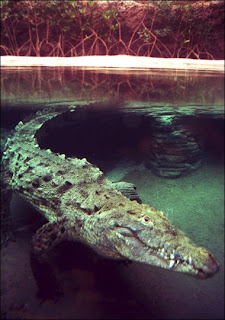 Crocodiles are throwbacks to the time of the dinosaurs, having changed very little for hundreds of millions of years. They have long, muscular bodies with powerful jaws and rows of strong teeth. They also have a number of special adaptations as aquatic predators, including eyes and nostrils on the top of their head that allow them to see and breathe while submerged. Once they capture their prey, they drag it underwater for a wrestling match to the death. American crocodiles were once hunted mercilessly for their skins, but now the main threat comes from loss of suitable wetland habitat.
IUCN Status: Endangered
USFWS Status: Endangered
Major Threats: Loss of suitable wetland habitat
Habitat: Western Mexico to Ecuador and southern Florida to Guatemala
Location: Eastern Oklahoma and Block Island, Rhode Island
Diet:
Crocodiles are throwbacks to the time of the dinosaurs, having changed very little for hundreds of millions of years. They have long, muscular bodies with powerful jaws and rows of strong teeth. They also have a number of special adaptations as aquatic predators, including eyes and nostrils on the top of their head that allow them to see and breathe while submerged. Once they capture their prey, they drag it underwater for a wrestling match to the death. American crocodiles were once hunted mercilessly for their skins, but now the main threat comes from loss of suitable wetland habitat.
IUCN Status: Endangered
USFWS Status: Endangered
Major Threats: Loss of suitable wetland habitat
Habitat: Western Mexico to Ecuador and southern Florida to Guatemala
Location: Eastern Oklahoma and Block Island, Rhode Island
Diet:
 Weighing between 300 and 350 pounds, the green sea turtle is the largest of the world's sea turtles. They occur globally in tropical and subtropical waters, and females nest on the beaches of at least 80 countries. The green sea turtle is threatened worldwide by overexploitation of eggs and adults. They are also often taken as bycatch in fishing operations and threatened in some parts of their range by a disease that causes tumors.
IUCN Status: Endangered
USFWS Status: Endangered
Major Threats: Overexploitation of eggs and adults; incidental capture in fishing gear
Habitat: Warm, open tropical and subtropical ocean
Location: Pacific, Atlantic and Indian oceans
Diet: Algae and sea grass
Weighing between 300 and 350 pounds, the green sea turtle is the largest of the world's sea turtles. They occur globally in tropical and subtropical waters, and females nest on the beaches of at least 80 countries. The green sea turtle is threatened worldwide by overexploitation of eggs and adults. They are also often taken as bycatch in fishing operations and threatened in some parts of their range by a disease that causes tumors.
IUCN Status: Endangered
USFWS Status: Endangered
Major Threats: Overexploitation of eggs and adults; incidental capture in fishing gear
Habitat: Warm, open tropical and subtropical ocean
Location: Pacific, Atlantic and Indian oceans
Diet: Algae and sea grass
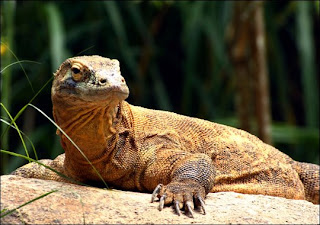 The Komodo dragon is the world's heaviest lizard, weighing 150 pounds or more. It has gray scaly skin, a pointed snout, powerful limbs and a muscular tail. It lives in the scrub and woodland of a few Indonesian islands. They use their keen sense of smell to locate decaying animal remains from several miles away. They also hunt other lizards as well as large mammals and are sometimes cannibalistic. This species is threatened by hunting, loss of prey species and habitat loss.
IUCN Status: Vulnerable
USFWS Status: Endangered
Major Threats: Habitat loss, loss of prey species and poaching
Habitat: Open grassland, tropical savanna, tropical forest and scrub
Location: Lesser Sundu archipelago of Indonesia
Diet: Mainly carrion; also attacks large live prey
The Komodo dragon is the world's heaviest lizard, weighing 150 pounds or more. It has gray scaly skin, a pointed snout, powerful limbs and a muscular tail. It lives in the scrub and woodland of a few Indonesian islands. They use their keen sense of smell to locate decaying animal remains from several miles away. They also hunt other lizards as well as large mammals and are sometimes cannibalistic. This species is threatened by hunting, loss of prey species and habitat loss.
IUCN Status: Vulnerable
USFWS Status: Endangered
Major Threats: Habitat loss, loss of prey species and poaching
Habitat: Open grassland, tropical savanna, tropical forest and scrub
Location: Lesser Sundu archipelago of Indonesia
Diet: Mainly carrion; also attacks large live prey
 Weighing up to about 1,700 pounds, the leatherback sea turtle is by far the largest sea turtle. It is also the world's deepest diving, most migratory and wide-ranging of all sea turtles. The leatherback differs from other sea turtles in that it has a leathery shell and flippers without claws. It is known to travel great distances, with some tagged individuals spanning entire oceans. The leatherback sea turtle is threatened throughout its range by nest-site disturbance, fishing operations, pollution and egg collection.
IUCN Status: Critically Endangered
USFWS Status: Endangered
Major Threats: Nest-site disturbance, fishing operations, pollution and egg collection
Habitat: Warm, open ocean
Location: Worldwide tropical oceans
Diet: Mainly jellyfish, small crustaceans and fish
Weighing up to about 1,700 pounds, the leatherback sea turtle is by far the largest sea turtle. It is also the world's deepest diving, most migratory and wide-ranging of all sea turtles. The leatherback differs from other sea turtles in that it has a leathery shell and flippers without claws. It is known to travel great distances, with some tagged individuals spanning entire oceans. The leatherback sea turtle is threatened throughout its range by nest-site disturbance, fishing operations, pollution and egg collection.
IUCN Status: Critically Endangered
USFWS Status: Endangered
Major Threats: Nest-site disturbance, fishing operations, pollution and egg collection
Habitat: Warm, open ocean
Location: Worldwide tropical oceans
Diet: Mainly jellyfish, small crustaceans and fish
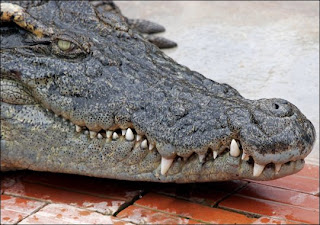 The Siamese crocodile is a Southeast Asian reptile that lives in slow-moving freshwater habitats such as rivers, swamps and streams. It has a broad snout, powerful tail and grows to a length of about 12 feet. Populations of Siamese crocodile are rapidly decreasing due to hunting and loss of habitat.
IUCN Status: Critically Endangered
USFWS Status: Endangered
Major Threats: Conversion of habitat to agricultural land and poaching
Habitat: Swamps and the sheltered parts of rivers, streams and lakes
Location: Borneo, Indonesia, Laos, Malaysia, Myanmar, Thailand and Vietnam
Diet: Mainly fish; also amphibians, reptiles and possibly small mammals
The Siamese crocodile is a Southeast Asian reptile that lives in slow-moving freshwater habitats such as rivers, swamps and streams. It has a broad snout, powerful tail and grows to a length of about 12 feet. Populations of Siamese crocodile are rapidly decreasing due to hunting and loss of habitat.
IUCN Status: Critically Endangered
USFWS Status: Endangered
Major Threats: Conversion of habitat to agricultural land and poaching
Habitat: Swamps and the sheltered parts of rivers, streams and lakes
Location: Borneo, Indonesia, Laos, Malaysia, Myanmar, Thailand and Vietnam
Diet: Mainly fish; also amphibians, reptiles and possibly small mammals


